

Green-e® Renewable Fuels
Biofuels are increasingly emerging as a viable solution for commercial and residential customers who want an effective way to use fuels with lower lifecycle greenhouse gas emissions, and offer pathways to accelerate the transition to a clean energy economy.
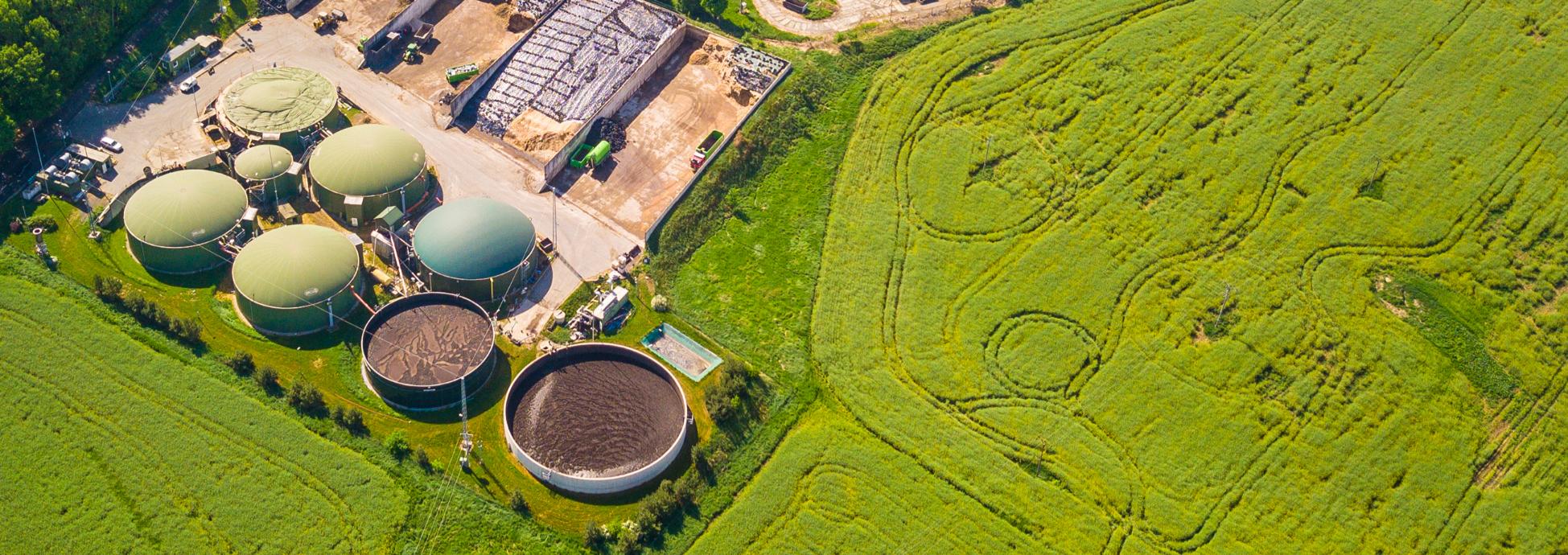
The Green-e® Renewable Fuels certification aims to accelerate the adoption of biomethane (also known as renewable natural gas, or RNG) while ensuring it is produced from sustainable, renewable resources, meets rigorous environmental standards, and provides customers with confidence in their purchases and claims.
As with any emerging market, establishing a robust quality standard and oversight framework is essential to ensure consumer confidence. The Green-e® Renewable Fuels certification fulfills this role by requiring that certified biomethane:
Is sourced from sustainable projects.
To ensure a positive environmental impact, biomethane production emissions, including leakage up to the point of pipeline injection, must achieve a carbon intensity (CI) score at least 10% lower than that of fossil natural gas. Carbon intensity refers to the amount of greenhouse gas emissions per unit of energy. CI scores, including pipeline leakage, are disclosed to customers. Additional sustainability criteria ensure that projects do not negatively affect local communities.
Is verified.
Sellers of Green-e® Renewable Fuels–certified biomethane are reviewed annually to ensure compliance with marketing and advertising claims. Certified biomethane volumes are tracked and audited through the annual Green-e® Renewable Fuels verification process.
Goes beyond business-as-usual.
Voluntary market customers seek to drive an incremental impact beyond regulatory requirements. Accordingly, certified biomethane cannot be used for compliance with state mandates or generating credits under regulatory programs (e.g., RINs or LCFS).
Program Expansion
The Center for Resource Solutions (CRS) has developed the Green-e® certification program for renewable fuels, beginning with biomethane. The program is designed to be flexible and adaptable to a wide range of renewable fuel types. The Green-e® Renewable Fuels Standard for biomethane was published in September 2021 and is currently available alongside the program’s Code of Conduct and supporting documentation.
As a natural extension of the program, CRS is actively working to expand Green-e® Renewable Fuels certification to include additional renewable fuel types. Hydrogen’s environmental advantages and versatility position it as a strong candidate to become a cornerstone of the clean energy economy. It can be produced with minimal or zero carbon emissions, offers high energy density, and provides solutions for hard-to-electrify sectors such as heavy industry, transportation, and chemicals.
For market participants, this represents a significant growth opportunity. Efforts are increasingly focused on shaping hydrogen markets, securing supply chains, advancing green hydrogen technologies for applications such as fertilizer production, steelmaking, and shipping, and leveraging government support as demand for low-carbon feedstocks grows.
CRS is developing comprehensive voluntary market standards for renewable hydrogen to ensure that buyers receive high-quality, verified, and non-double-counted renewable hydrogen. Integrating renewable hydrogen into the Green-e® Renewable Fuels certification will support market development while ensuring environmental integrity and transparency.
Target timeline: Final inclusion of renewable hydrogen in the Green-e® Renewable Fuels Standard is anticipated in late 2026.
Standard Development Process
As an initial step, CRS convenes a Working Group and an Advisory Group to provide environmental, technical, and market input prior to drafting a standard for the fuel under consideration (previously biomethane and currently renewable hydrogen). This is followed by a public stakeholder consultation process.
The Advisory Group comprises environmental nonprofit organizations, Green-e® Governance Board members, academic experts, and industry stakeholders. As with all Green-e® standards, development follows the established Green-e® Standard Setting process.
Documents
Standard
Green-e® Renewable Fuels Standard.
The Standard was approved on September 16, 2021 and provides the criteria that Green-e® certified renewable fuel products, renewable gas tariffs and Renewable Fuels Certificates (“RFCs”) must meet.
Version 1.1, August 6, 2025
Notes
- Approved Carbon Intensity Calculation Methodologies: All fuel production facilities used toward Green-e® Renewable Fuels certified sales must calculate a Carbon Intensity (CI) score based on one of the following methodologies, based on the facility’s location. CRS may approve other methodologies at its discretion.
- GHGenius for fuel production facilities in Canada
- California Air Resources Board’s Low Carbon Fuel Standard for fuel production facilities in the USA
- Fossil Natural Gas Carbon Intensity: The Carbon Intensity of fossil natural gas that must be used for demonstrating compliance with Section V of the Green-e® Renewable Fuels Standard is: 9.38 gCO2e/MJ.
- This number is derived from this CA GREET guidance document, referencing the fossil natural gas Recovery and Processing stages.
- CleanCounts Registry. Approved for use toward Green-e® Renewable Fuels certified transactions in Canada and the U.S. “Renewable Thermal Certificates” tracked in CleanCounts refer to the same tradable commodity as “Renewable Fuels Certificates” in the Green-e® Renewable Fuels program.